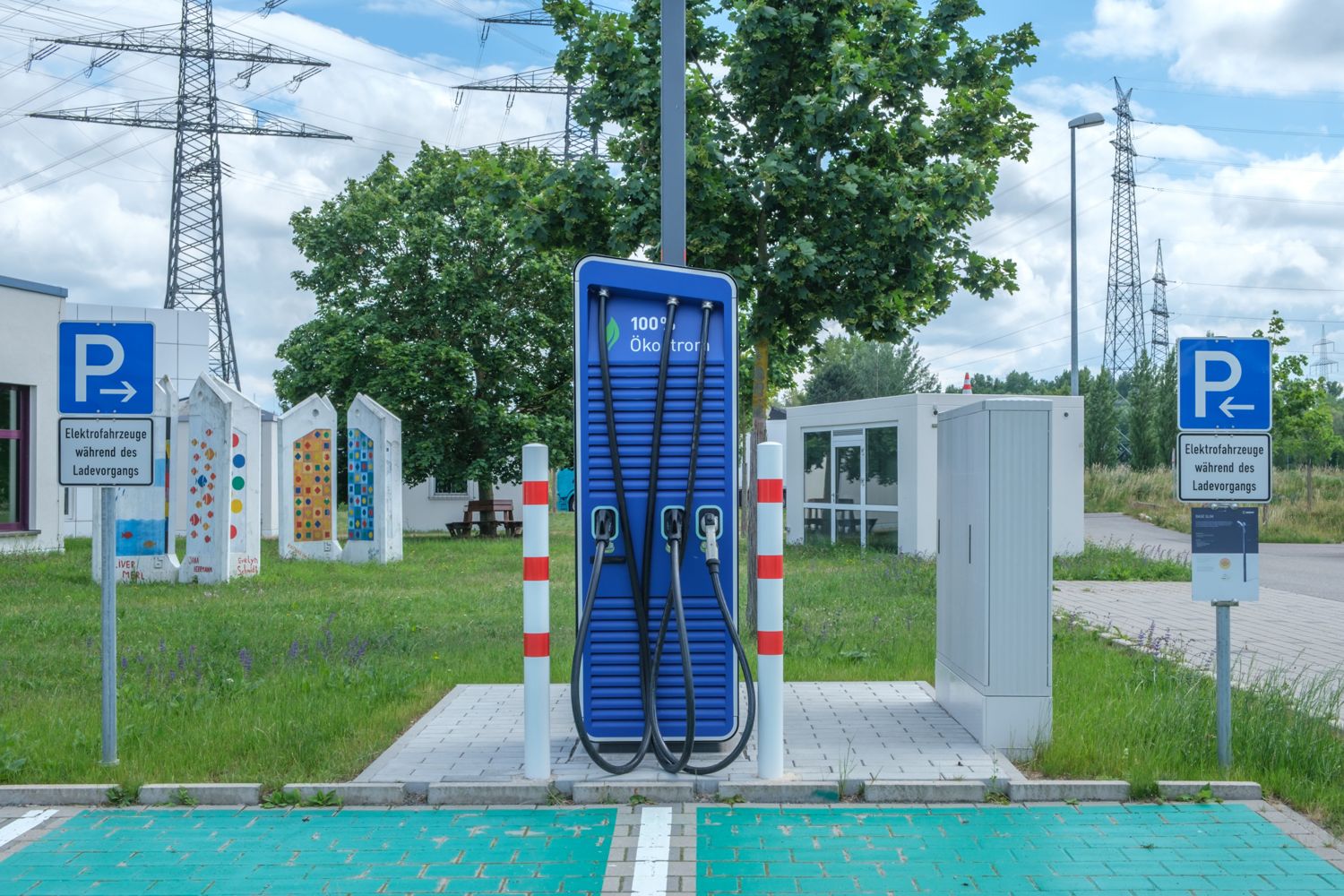
In shortWhere several EV chargers share one service, an energy management system can cap their combined demand, so the service does not have to be sized for every charger running at full power at once. In the US this is covered by NEC Article 625, including 625.42, with the load calculation under Article 220. The design needs the existing load worked out first, then a control scheme that is documented clearly enough for the inspector to follow.
Where does the calculation start?
With the load the building already has. For an existing building the adopted NEC may allow the existing demand to be determined from recorded maximum-demand data, which is often lower than a calculated figure and can free up capacity. If there is no data, the standard Article 220 calculation applies. Either way, write down which method was used, because the headroom you find here decides how many chargers fit.
How is a charger counted?
Each charger is treated as a continuous load, so its circuit and the conductors serving it are sized at 125% of the charger's rating. A Level 2 charger rated at 48 A therefore needs a 60 A circuit. Four of them, left unmanaged, add 192 A of charging load, and 125% of that is 240 A of capacity needed at the service, which is more than many existing 200 A services can give.
What does load management change?
An energy management system limits the total current the chargers can draw. If the system is set to hold the group to 80 A, the calculation can carry that managed limit instead of the sum of the individual ratings, subject to the way the adopted NEC edition counts it. The chargers still have their own circuits, but they share the managed capacity, so each one slows down when several are in use and speeds up when others are idle.
There are two common approaches. A static limit fixes the group's maximum. A dynamic system measures the building's load and gives the chargers whatever is left, which uses spare capacity more fully.
What does the inspector want to see?
The single-line diagram should show the energy management equipment and the limit it is set to. The load calculation should show the managed load and the setting it relies on, and the equipment should be listed for the purpose. The setting needs to be protected from casual change, and the drawings should say who is allowed to change it. Some utilities also want to be told about managed loads at the service, so ask early.
How do you leave room for more chargers?
Run conduit and leave panel space for the chargers you expect in the next few years, even if only some are installed now. Pulling a conduit during the first build costs far less than trenching later, and a managed system can then take new chargers without a service upgrade.
Frequently asked questions
Can I add EV chargers without upgrading my electrical service?
Often, yes. If the existing demand leaves headroom and an energy management system limits the chargers' combined load, the service may not need upsizing. The load calculation has to show it.
Does every charger still need its own circuit?
Yes. Each charger has its own branch circuit sized for its rating; the management system controls how much power the group can draw at once.
Is load management the same in Australia and New Zealand?
The idea is the same, but the rules differ. We design EV charging circuits and load management to AS/NZS 3000 and coordinate with the network operator.
What does a charging design from SYMATEQ include?
The service load calculation, the circuit and panel design, the management scheme on the single-line diagram, conduit and space for future chargers, and the documents for permit.
SYMATEQ designs EV charging, solar PV and battery storage as part of its electrical design assist, to the NEC and the local amendments in the US and to AS/NZS 3000 in Australia and New Zealand.
See solar, EV charging and backup power, electrical design assist, or send us a job.